

Loneliness and social isolation among older adults aren’t inevitable parts of aging—they’re systemic failures that damage health, strain families, and burden communities. And they can be prevented with everyday actions.
Loneliness often steals lives quietly.
For Clara, 86, the signs appeared slowly: long afternoons spent listening to the hum of her neighborhood, strained conversations with her hard-of-hearing husband, and phone calls from her adult children that arrived only at day’s end. Though surrounded by familiar sounds, she felt increasingly disconnected. Subtle changes in her mood and memory followed—an early indication of how isolation can erode emotional and cognitive health. With steady encouragement from her children, Clara joined local community programs that restored routine, engagement, and connection. Her story illustrates both the human cost of loneliness and the possibility of meaningful recovery when support systems are in place.
The Gravity of the Crisis
Clara’s experience is far from unique. Loneliness and social isolation are recognized as significant public health threats. The World Health Organization identifies them as critical social determinants of health that undermine well-being across the lifespan (WHO). Prolonged disconnection increases risks for heart disease, stroke, dementia, and early mortality (NCBI), while also driving avoidable healthcare and long-term care costs. Allowing such conditions to persist undermines dignity and equity in aging.
What the Data Shows
National data makes the scope of the problem unmistakable:
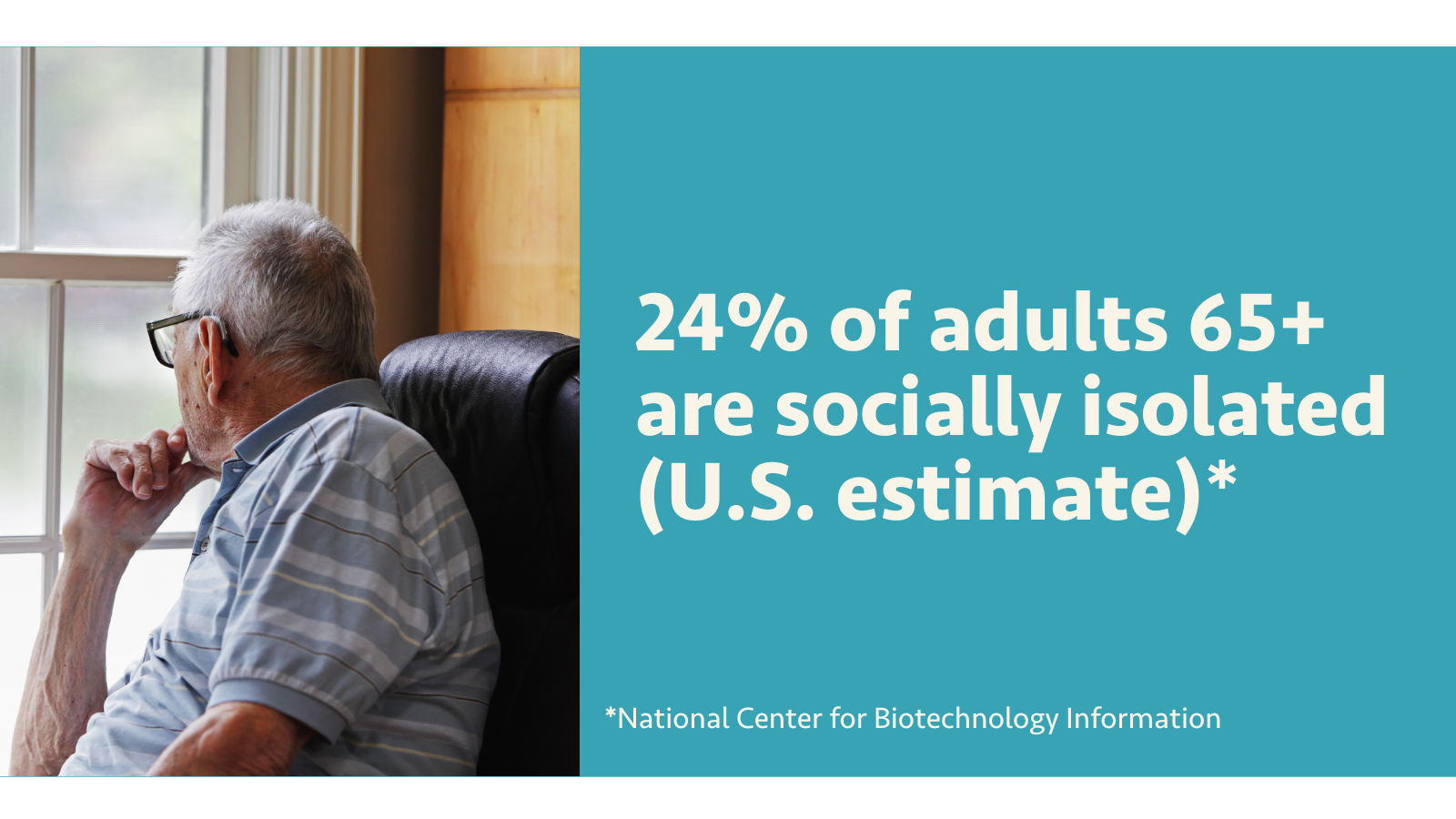
- Nearly 24% of adults 65+ are socially isolated (NCBI).
- 35–43% of adults 45+ report feeling lonely, with even higher rates among those over 60 (NCBI).
- 37% of adults aged 50–80 experience loneliness, and 34% experience social isolation (JAMA Network).
- One in three older adults feels lonely—rates comparable to major chronic conditions (National Academies).
Loneliness is pervasive, measurable, and preventable.
Health Impacts
Loneliness is more than an emotional burden—it affects nearly every system in the body.
- Physical health: Higher risks of premature death, cardiovascular disease, and stroke (NCBI).
- Cognitive health: Increased risk of dementia and accelerated biological aging (OUP Academic).
- Mental health: Greater likelihood of depression, anxiety, and psychological distress (JMIR Public Health).
Its impacts rival the dangers of smoking and obesity.
What Drives the Crisis
Contrary to common assumptions, loneliness isn’t caused by age alone. It is shaped by environments, policies, and social structures.
Structural drivers include:
- Community design that limits walkable, social spaces
- Transportation barriers
- Healthcare systems that overlook social needs
- Retirement transitions that fracture networks
- Cultural norms that marginalize older adults
Personal and social factors include:
- Loss of partners and peers
- Chronic illness and limited mobility
- Sensory impairments
- Financial and accessibility barriers
These layers compound, creating conditions where isolation can grow unless intentional connections are supported.
How We Can Fix It: A Practical Playbook
This crisis is solvable. Solutions begin with everyday acts and extend to systemic change.
Families & Friends
- Reach out consistently through calls, visits, and shared routines.
- Include older adults as active participants, not observers.
- Support involvement in hobbies, groups, and community programs.
Neighbors & Communities
- Create welcoming spaces—gardens, clubs, intergenerational programs.
- Offer or coordinate transportation to events.
- Volunteer with organizations serving older adults.
Clinicians & Care Providers
- Screen for loneliness and social isolation as part of holistic care (American Medical Association).
- Use social prescriptions to connect patients with local resources.
- Partner with social workers and community programs.
Policymakers & Planners
- Invest in age-inclusive community design and accessible transportation.
Conclusion: A Different Story About Aging
Imagine a community where older adults are visible, valued, and connected—where aging is celebrated rather than sidelined, and where the wisdom of later life enriches everyday life. Birmingham Green exemplifies what’s possible when we design with connection in mind. With a holistic approach to senior living, our Life Enrichment Program fosters social, cultural, and cognitive engagement through daily activities, outings, and creative programs tailored to residents’ interests. From group events and exercise classes to arts, crafts, and therapeutic recreation, residents have meaningful opportunities to meet both their social and emotional needs.
We also know we cannot do this work alone. Community members who choose to share their time and talents play a vital role in the well-being of our residents. Each day, volunteers help enrich the lives of nearly 300 older adults across our campus. If you are interested in being part of the solution and learning more about opportunities at Birmingham Green, please contact Andre Porter, Director of Volunteer and Transportation Services, at aporter@birminghamgreen.org. For current volunteers, your continued presence matters deeply, and we are grateful for your ongoing support.
Loneliness is not destiny; it is a call to action. From living rooms to legislative halls, every connection counts. Together, we can rewrite the story of aging—not as a slide into isolation, but as an amplified chapter of purpose, belonging, and human dignity.
By Denise Chadwick Wright, Chief Executive Officer at Birmingham Green
703-257-0935 | dwright@birminghamgreen.org
Sources
- World Health Organization – Social isolation and loneliness as social determinants of health
- National Institutes of Health (NIH) / National Center for Biotechnology Information (NCBI) – Studies on social isolation, loneliness, and health outcomes
- JAMA Network – National Poll on Healthy Aging
- National Academies of Sciences, Engineering, and Medicine – Social Isolation and Loneliness in Older Adults
- Oxford University Press (OUP Academic) – Research on loneliness and dementia risk
- JMIR Public Health and Surveillance – Studies on mental health impacts of loneliness
- American Medical Association – Social connection and clinical screening guidance